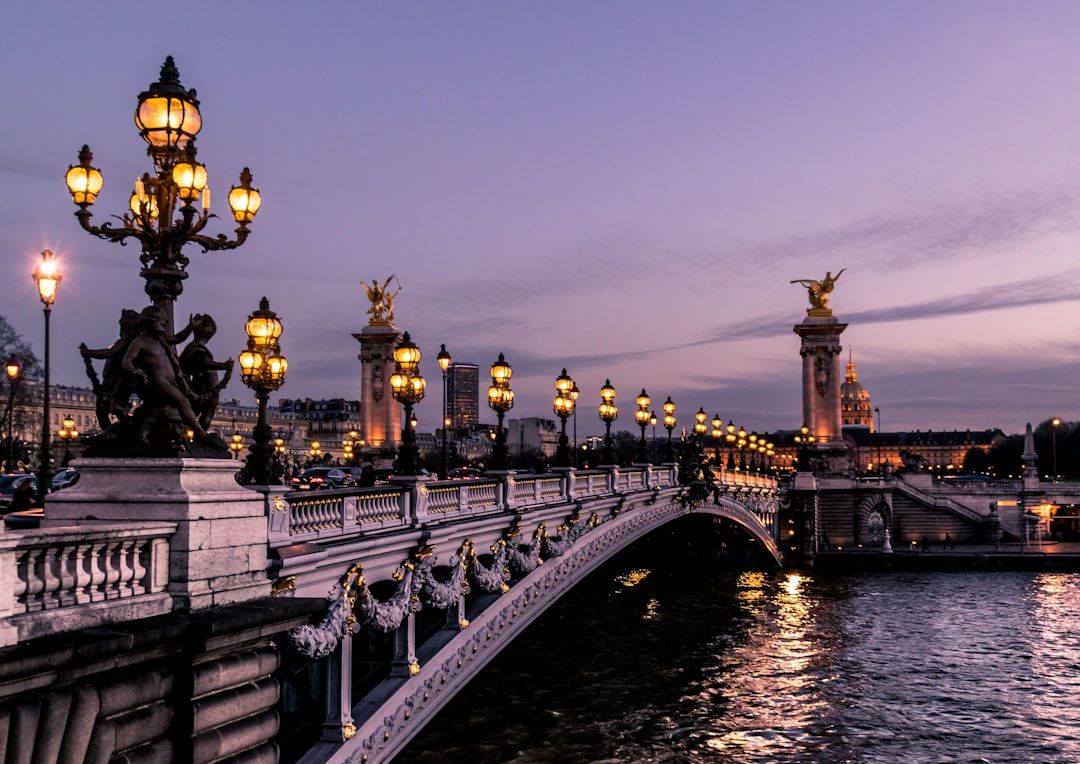
Three days in Paris is enough for a first visit, and the thing that ruins it is not distance — the centre is small — but queueing. Two advance bookings and a willingness to walk change the trip entirely.
Before you go: book exactly two things
The Eiffel Tower, if you intend to go up, and the Louvre, if you intend to go in. Both use timed entry and both sell out for the good slots. Everything else on this plan can be decided on the morning.
If you are choosing one museum, consider making it the Musée d'Orsay instead of the Louvre: it holds the Impressionists, it is a converted railway station and beautiful in itself, and you can see it properly in two hours rather than being defeated in four.
Day one: the islands and the Marais
Start at Île de la Cité. Notre-Dame's exterior and the square in front are worth the time regardless of what is open inside; Sainte-Chapelle, a few minutes away, is the one interior nobody regrets — a small upper chapel that is essentially a room made of stained glass. Go in the morning when the light comes through it.
Cross to the Marais and stop navigating. It is the oldest surviving quarter, narrow streets, the Place des Vosges, falafel on Rue des Rosiers, and the best afternoon in the city for simply walking.
End on the Seine. The riverbanks are pedestrianised in places and it is where Parisians actually sit in the evening.
Day two: the Left Bank
Musée d'Orsay first, at opening. Then walk south into Saint-Germain and the Latin Quarter, through the Luxembourg Gardens — which are a working public park rather than a sight, and better for it.
The Panthéon and Shakespeare and Company are both here and both take fifteen minutes. Do not build a schedule around them.
Evening: this is the right day for the Eiffel Tower if you booked it, because approaching from the Left Bank along the river gives you the best sequence of first views. On the hour after dark it sparkles for five minutes.
Day three: Montmartre and the west
Montmartre in the morning, before the coaches. Sacré-Cœur's terrace has the widest view over Paris and costs nothing. Behind the basilica the village streets empty out within two minutes' walk of the crowds — that is where the neighbourhood actually is.
Afternoon: either the Louvre if you booked it, or the Champs-Élysées and the Arc de Triomphe. The arch's roof is the better viewpoint than the Eiffel Tower, for the obvious reason that the Eiffel Tower is in the picture.
Use the underpass to reach the arch. Crossing that roundabout on foot is not a joke people are making.
Practicalities that save time
Walk more than you plan to. The Marais to the Louvre is twenty minutes. Saint-Germain to the Orsay is ten. People routinely descend into the metro for journeys that are shorter on the surface and far more interesting.
Eat lunch as the main meal. The formule at lunch is a fraction of the dinner price for the same kitchen, and it frees the evening for walking.
Skip Versailles on a three-day trip. It is a full day including travel, and it costs you a third of your Paris.
What to drop if you are running late
The Louvre, the Champs-Élysées, and any museum you added because it was on a list. Paris rewards sitting still in it more than most cities, and a three-day plan that is 80 percent achieved at a walking pace beats one that is 100 percent achieved at a run.